Engineering Materials Guide
High-performance plastics for functional parts: printer compatibility, settings, and handling.
Which engineering materials can my Bambu printer handle?
A1 and A1 Mini handle PLA and PETG only. ABS/ASA requires at least a P1S or P2S (enclosed). PC and Nylon need an actively heated chamber: the X2D (X1C successor) or an H2S/H2D. For PPA and high-temp materials, the H2S/H2D with active chamber heating is required.
Higher temperature resistance, better mechanical strength, chemical or wear resistance, and dimensional stability. The trade-off: harder to print, requiring enclosed chambers, higher temperatures, and careful handling.
| Material | A1 Mini | A1 | P1P | P1S / P2S | X1C / X2D | H2S / H2D |
|---|---|---|---|---|---|---|
| ABS | No | No | DIY enclosure | Yes | Yes | Yes |
| ASA | No | No | DIY enclosure | Yes | Yes | Yes |
| PC | No | No | No | Limited | Yes | Yes |
| Nylon (PA) | No | No | DIY enclosure | Limited | Yes | Yes |
| PA-CF | No | No | No | Limited | Yes | Yes |
| PPA | No | No | No | No | Limited | Yes |
ABS
The classic engineering plastic. Good strength, machineable, paintable. Requires an enclosure to prevent warping. Produces styrene fumes; ventilate or use the built-in filtration.
| Setting | Value |
|---|---|
| Nozzle temp | 240–260°C |
| Bed temp | 90–110°C |
| Chamber temp | 40°C+ ideal |
| Enclosure required | Yes |
| Nozzle type | Standard OK |
ASA
ABS with better UV resistance and slightly better weathering. Ideal for outdoor parts. Similar print settings to ABS but slightly more forgiving on warping.
| Setting | Value |
|---|---|
| Nozzle temp | 245–265°C |
| Bed temp | 90–110°C |
| Enclosure required | Yes |
| Nozzle type | Standard OK |
Polycarbonate (PC)
The strongest common printing material. Used in safety equipment and high-impact applications. Requires high chamber temperatures: the X2D and H2S handle it well, the P1S can manage basic PC with careful settings.
| Setting | Value |
|---|---|
| Nozzle temp | 280–310°C |
| Bed temp | 100–120°C |
| Chamber temp | 55–60°C needed |
| Enclosure required | Yes (essential) |
| Nozzle type | Hardened recommended |
Nylon (PA6 / PA12)
Excellent toughness and fatigue resistance. Extremely hygroscopic: absorbs moisture within hours of being opened. Must be kept dry and ideally printed directly from a dryer. Printed parts continue to absorb moisture after printing, which changes dimensional properties.
| Setting | Value |
|---|---|
| Nozzle temp | 240–270°C |
| Bed temp | 70–90°C |
| Enclosure required | Yes |
| Dry filament essential | Yes |
| Nozzle type | Standard OK |
Carbon fiber composites (CF)
Carbon fiber strands blended into a base material (PLA-CF, PETG-CF, PA-CF, PC-CF). Adds stiffness and dimensional stability. Very light. The CF content is abrasive; a brass nozzle will be destroyed within hours. Always use a hardened steel, stainless steel, or ruby nozzle.
| Setting | Value |
|---|---|
| Nozzle temp | Depends on base material |
| Flow rate | Reduce 5–10% vs non-CF |
| Nozzle type | Hardened steel required |
| Cooling | Good cooling needed |
PPA (Polyphthalamide)
High-performance Nylon variant. Better heat and chemical resistance than standard PA. Used in automotive and aerospace. Requires the H2S or H2D for best results: the 65°C active chamber heating is key to preventing warping.
| Setting | Value |
|---|---|
| Nozzle temp | 300–340°C |
| Bed temp | 110–130°C |
| Chamber temp | 60–70°C needed |
| Nozzle type | Hardened steel required |
- Dry filament is not optional: For PA, PC, and CF composites, moisture ruins prints. Use a dryer or vacuum-sealed storage with active desiccant
- Slower is often better: Engineering materials generally benefit from slower speeds and more time for layer bonding
- Check nozzle compatibility before starting: CF, GF, and PPA will destroy a brass nozzle quickly
- The H2S and H2D are designed for this: The 65°C active chamber heating and 350°C nozzle capability is specifically for high-performance materials that lower-tier enclosed printers can only partially handle
- Ventilate: Engineering materials produce more fumes. The built-in activated carbon filter binds odour and VOCs but captures no ultrafine particles, so it doesn't replace ventilation
Need gear? Our tested picks · All accessories
Tools for this job
The gear engineering filaments demand.
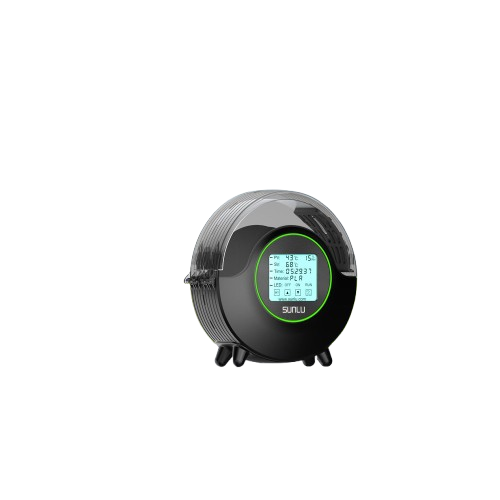
PA, PC and CF blends are ruined by moisture; this dries spools before printing and keeps them dry while you print.
Amazon →An affordable entry into CF printing: stiff, matte, dimensionally stable functional parts. Needs a hardened nozzle.
Amazon →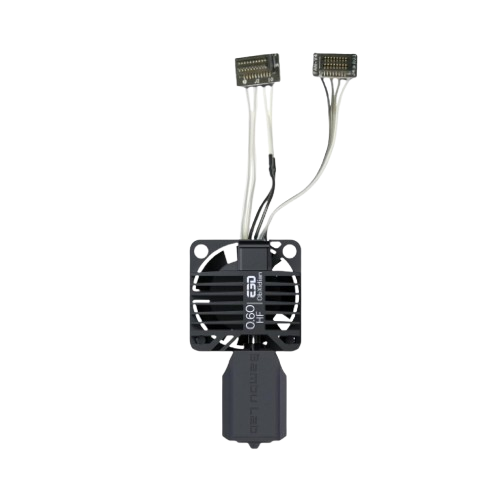
The hardened 0.6mm high-flow nozzle CF and GF filaments require on the P1P and P1S.
Amazon →Hardened steel nozzles for the A1 and A1 Mini quick-swap hotend; note the A1 series handles CF-filled PLA/PETG only.
Amazon →Affiliate links. We may earn a small commission at no extra cost to you.