Layer Shifting
Follow the steps in order. Loose belts are cause #1, start there.
Check belt tension
Pluck the belt like a guitar string, a dull thud means too loose, a high ping means too tight. Go to Settings ? Calibration ? Vibration Compensation, target: 110–150 Hz.
Also check for visible cracks or missing teeth. Damaged belts lose tension unevenly and cause sporadic shifts.
Enable Z-Hop
In Bambu Studio: Quality ? Travel ? Z-Hop, set to 0.3–0.5 mm. The print head lifts during travel moves and avoids collisions with curled edges or warping corners.
Nozzle collisions are the second most common cause, especially when the first layer has an elephant foot.
Reduce print speed
Reduce print speed by 20–30% and test again. Very high acceleration forces can exceed motor torque and cause missed steps.
Also reduce acceleration and jerk values if they were manually increased.
Clean the carbon rods
Dirt on the guide rods increases friction and causes missed steps. Clean the rods with 99% IPA and a lint-free cloth, then lubricate with PTFE dry spray.
Also check whether the printhead cable bundle catches anywhere when moving across its full range.
Less common causes
If all mechanical causes have been ruled out, electrical issues may be to blame. Expand the topic that matches your situation:
Shift only in X: X-belt, X-belt pulley, or X-motor. Shift only in Y: Y-belt, Y-belt pulley, or Y-motor. Shift in both directions at once points to overheating, power supply issues, or very high acceleration.
Reseat all stepper motor cable connections. Make sure the printer is well-ventilated, overheated motor drivers lose torque. Voltage drops under load can also cause missed steps; run the printer from a stable outlet.
Worn linear bearings cause grinding noises and intermittent binding. Push the printhead manually across its full range with the printer off. It should glide smoothly with no jerking or resistance.
Check belt tension monthly. Clean carbon rods every 3 months. Keep speed within rated values. Enable Z-Hop for sticky materials. Monitor the first layer for over-extrusion.
Still shifting? Interactive troubleshooter · Community
Tools that fix this
Free the motion system and torque the mechanics back down.

Silicone grease for the Z lead screws and rails: dry, sticky motion makes the toolhead bind and skip steps; lubricated axes move freely and stay in sync.
Amazon →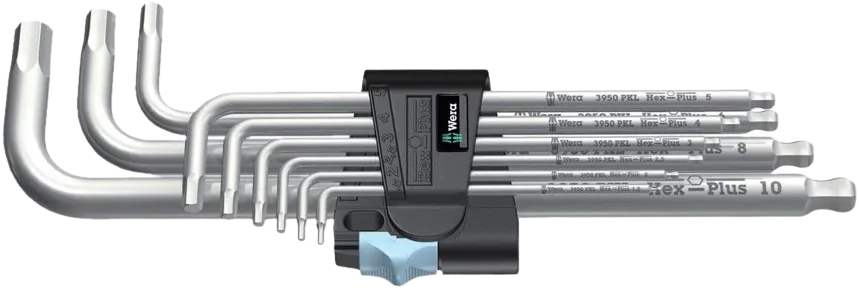
Loose belt-idler and pulley grub screws cause shifting; these hex keys let you re-tension and tighten them without stripping.
Amazon →Affiliate links. We may earn a small commission at no extra cost to you.
Nothing worked?
Post your case in the community forum, photos help a lot, and we answer within a day. Or try the interactive troubleshooter.
HMS codes that point here
If Bambu Handy or Bambu Studio shows one of these HMS codes, it maps to the problem on this page. Each code links to Bambu's official step-by-step fix; come back here if the official steps don't solve it.
HMS_0300-1000-0002-0001– X-axis resonance frequency low, timing belt may be loose · official fixHMS_0300-1000-0002-0002– X-axis resonance differs from last calibration (clean carbon rods) · official fixHMS_0300-1100-0002-0001– Y-axis resonance frequency low, timing belt may be loose · official fixHMS_0300-0600-0001-0001– Motor open-circuit, loose connection or failed motor · official fix