Layer Splitting & Weak Layer Adhesion
Horizontal cracks, layers separating, prints that snap apart too easily. Follow the steps in order.
Is it really layer splitting?
Layer splitting looks similar to under-extrusion and warping but has a different root cause and different fixes.
| Problem | Where it appears | What it looks like |
|---|---|---|
| Layer splitting | Middle or throughout print | Clean horizontal crack lines, layers pull apart with fingers |
| Under-extrusion | Everywhere | Gaps and holes in walls, porous/spongy material at break |
| Warping | Bottom layers only | Corners lifting off the build plate |
If the break surface is clean and smooth (the layers formed correctly but didn't bond), you have layer splitting. If the break surface is porous or rough, it's under-extrusion. Go to the under-extrusion guide →
Raise the nozzle temperature
Low print temperature is the primary cause of layer splitting. The nozzle must be hot enough to re-melt the previous layer slightly when each new layer lands. Without this, layers bond by contact only and separate under any stress.
Raise in 5 °C increments, run a test print after each change.
| Material | Start here if splitting | Maximum |
|---|---|---|
| PLA | 215–225 °C | 230 °C |
| PETG | 240–255 °C | 265 °C |
| ABS | 255–265 °C | 270 °C |
| ASA | 260–270 °C | 275 °C |
| PA / Nylon | 255–270 °C | 280 °C |
| PC | 275–290 °C | 300 °C |
To change in Bambu Studio: click the filament box → Nozzle temperature. Create a custom profile so you don't lose the change.
Reduce the cooling fan speed
Aggressive cooling locks each layer before the next one can bond to it. This is the second most common cause of layer splitting, especially with ABS, ASA, PETG, PA, and PC.
| Material | Part Cooling Fan | Enclosure needed? |
|---|---|---|
| PLA | 50–100% (reduce if splitting) | No (open for PLA) |
| PETG | 30–50% | Optional |
| ABS / ASA | 0–20% | Required |
| PA / Nylon | 0–40% | Required |
| PC | Minimal | Required |
In Bambu Studio: Filament settings → Cooling tab → Part Cooling Fan Speed. Also reduce Auxiliary Cooling Fan to 0% for ABS/ASA/PA/PC.
Dry your filament
Moisture in filament creates steam bubbles during printing that interrupt the melt and break the bond between layers. PA (Nylon) and PC are extremely hygroscopic and must be dried before every use. Even a freshly opened sealed bag in a humid room will absorb moisture within hours.
Signs of wet filament: crackling/popping sounds during printing, steam or small bubbles at the nozzle tip, rough or bubbly surface texture, worse-than-expected stringing.
| Material | Temp | Time |
|---|---|---|
| PLA | 45–55 °C | 6–8 h |
| PETG | 60–65 °C | 8 h |
| ABS / ASA | 65–80 °C | 6 h |
| TPU | 50–60 °C | 8 h |
| PA / Nylon | 80 °C | 12+ h |
| PC | 80–90 °C | 8 h |
Less common causes
The nozzle must physically press into the previous layer for polymer chains to bond. If the layer height exceeds ~75–80% of the nozzle diameter, there isn't enough contact. Rule: max layer height = nozzle diameter × 0.75. For a 0.4 mm nozzle, that's 0.30 mm. Printing at 0.35 mm or higher with a 0.4 mm nozzle is a reliable path to delamination. Reduce layer height and test.
Higher speed means less time for heat transfer between layers. At very high speeds, even a correct temperature setting may not deliver enough thermal energy. Reduce print speed by 20–30% as a test. For non-Bambu filaments and difficult materials (PA, PC), use the "Silent" profile as a starting point (typically 50–60 mm/s outer wall). TPU must be printed slowly: max 20–30 mm/s.
The key hidden difference between Generic and Bambu filament profiles is Max Volumetric Speed (MVS): Bambu PLA is set to 21 mm³/s, Generic PLA to 12 mm³/s. If you use a high-speed print profile (Sport, Ludicrous) with a Generic filament that has a lower MVS, the slicer throttles speed correctly. But if MVS is set higher than your filament can handle, you get under-extrusion between layers that looks like delamination. For third-party filaments: start with a Generic profile and calibrate MVS by slowly increasing until extrusion becomes inconsistent.
Moisture absorption alone is usually reversible with drying. But long-term exposure causes hydrolysis, which permanently breaks polymer chains. Signs of irreversible degradation: the filament snaps with a brittle crack (no flex at all) when you try to bend it, the printed surface turns dusty or chalky, layer splitting persists after multiple full drying cycles. PLA older than 2 years stored without protection is often too degraded to print reliably. If drying 8+ hours at correct temperature doesn't help: discard the spool.
Click the filament box in the Prepare tab → a popup or sidebar opens showing the filament parameters. Change Nozzle Temperature directly. To save permanently: click the pencil/edit icon → modify the profile → save as a new custom preset (don't overwrite Bambu's official profiles). Fan speed is under the Cooling tab in the same settings panel.
Nothing worked?
Post your case in the community forum, photos help a lot, and we answer within a day. Or try the interactive troubleshooter.
Layers are bonding again!
Bookmark this page for next time.
Tools that fix this
Restore consistent extrusion so layers bond instead of splitting.
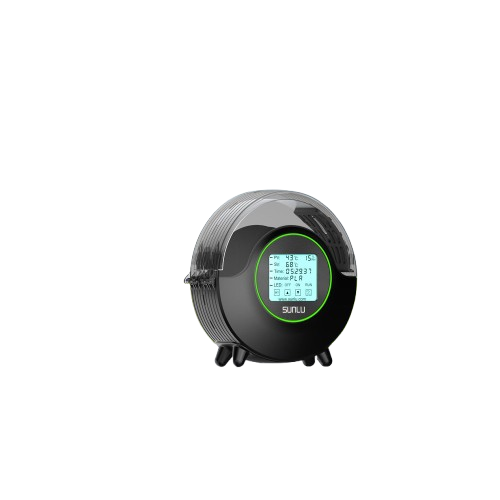
Wet filament prints weak, brittle bonds between layers; drying it lets layers fuse properly and stop delaminating.
Amazon →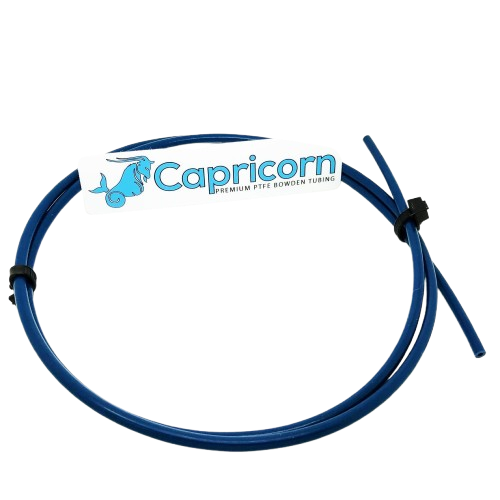
A degraded tube causes inconsistent feed and under-extrusion that leaves layers poorly bonded; a fresh one steadies flow.
Amazon →Affiliate links. We may earn a small commission at no extra cost to you.