Warping & Bed Adhesion Problems
Corners lifting, first layer not sticking, print detaching mid-print. Follow the steps in order.
Wash the build plate
A dirty plate is the single most common cause of adhesion failure. Finger oils are invisible but completely destroy the adhesion properties of PEI. IPA alone is not enough, as it redistributes oils rather than removing them.
- Remove the plate from the printer.
- Wet the surface with water, apply a few drops of regular dish soap.
- Scrub with a sponge or soft brush (a brush reaches into the texture better).
- Rinse thoroughly with clean water.
- Dry with a paper towel. Do not let tap water air-dry (mineral deposits).
- From this point on: only touch the plate by its edges. Never touch the print surface.
Do not use dish soap that contains moisturizers or oils, as these leave residue.
Correct plate and temperature for your material
Bambu printers use different build plates for different materials. Using the wrong plate, or having the wrong plate selected in Bambu Studio (which controls temperatures), is a very common mistake.
| Plate | Best for | Glue required? |
|---|---|---|
| Cool Plate | PLA, TPU | Yes, always |
| Textured PEI | PLA, PETG, ABS, ASA, PA, PC, TPU | No (PETG: glue as release agent) |
| Engineering Plate | PETG, ABS, ASA, PA, PC | Recommended |
| High Temp / Smooth PEI | ABS, ASA, PC, PA | Yes |
Bed temperature targets (raise if your current settings are lower):
| Material | Textured PEI | Engineering Plate |
|---|---|---|
| PLA | 65 °C | – |
| PETG | 70 °C | 70–85 °C |
| ABS / ASA | 90–100 °C | 90–110 °C |
| PA / Nylon | 70–90 °C | 70–90 °C |
| PC | 100–120 °C | 100–120 °C |
Check your enclosure and fan settings
Two opposite mistakes cause warping: the enclosure open when it should be closed, or the cooling fan too strong.
Close the enclosure for: ABS, ASA, PC, PA and all CF/GF variants. These materials need a warm chamber (40–60 °C) to prevent thermal stress. Open-frame printers (A1, A1 Mini) are not recommended for large ABS/ASA/PC/PA parts for this reason.
Open the enclosure for: PLA and TPU. A closed chamber causes heat creep and nozzle clogs. Open the front door and/or remove the top glass.
Reduce the Auxiliary Cooling Fan: On X1C and P1S, the auxiliary fan is a known cause of warping with PETG and ABS, even when bed temperature is correct. In Bambu Studio: Filament settings → Cooling → set Auxiliary Cooling Fan speed to 0% for ABS/ASA, and reduce to 0–30% for PETG.
Add a brim and check Z offset
Add a brim: In Bambu Studio, left sidebar → Brim → enable, set width to 5–8 mm. A brim holds down the corners during printing. Set brim gap (separation) to 0.1–0.2 mm for easier removal. Avoid combining high Elephant Foot Compensation with a tight brim gap. Bambu Studio has a known bug where these two settings interact and make the brim too loose.
Use Brim Ears for corner warping: Bambu Studio toolbar → Brim Ears tool. Auto-generation places extra material exactly at the corners where lifting occurs.
Check first layer Z offset: If the nozzle is slightly too high, the first layer won't bond to the plate. During a print: Device tab in Bambu Studio → live Z offset slider. Adjust in –0.01 mm steps until the first layer looks slightly squished and forms a solid sheet without gaps.
Less common causes
PETG can bond so strongly to smooth PEI that it tears the coating when you try to remove the print. The fix: apply a thin, even layer of Bambu glue stick (or regular Pritt stick) to the plate before printing PETG. This acts as a release agent, not an adhesive. Let the plate cool completely before removing the print. PETG releases on its own at room temperature.
Infill above 50% creates significant internal stress as material shrinks during cooling. This stress concentrates at corners and pulls them up. For large, flat parts that need to stay flat: reduce infill to 15–25%, add more perimeter walls instead (3–5 walls), and use a brim. Gyroid infill creates less stress than grid or rectilinear patterns.
Moisture in filament can cause the first layer to appear to adhere initially but then detach as steam pressure builds. PA, PC, and PETG are especially prone. Dry before printing (Nylon: 80 °C, 12+ h; PETG: 65 °C, 8 h; PC: 80 °C, 8 h) and store in sealed containers with fresh desiccant.
All Bambu build plates are consumables. After 100–500+ hours of use (depending on material and cleaning frequency), adhesion properties fade. Textured PEI can be lightly scuffed with fine sandpaper or steel wool to restore the surface texture. Smooth PEI plates are harder to restore and typically need replacement. If you've cleaned the plate thoroughly and adhesion is still poor: the plate may simply be worn out.
Nothing worked?
Post your case in the community forum, photos help a lot, and we answer within a day. Or try the interactive troubleshooter.
Prints are sticking again!
Bookmark this page for next time.
Tools that fix this
Lock the first layer down so corners stop lifting.
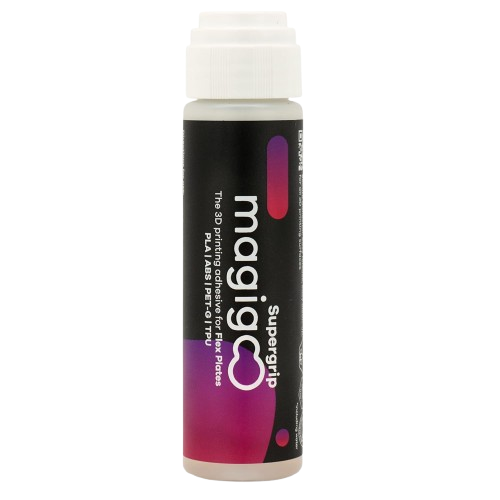
A dab of this adhesive grips warp-prone corners to the plate while hot and releases cleanly once cooled.
Amazon →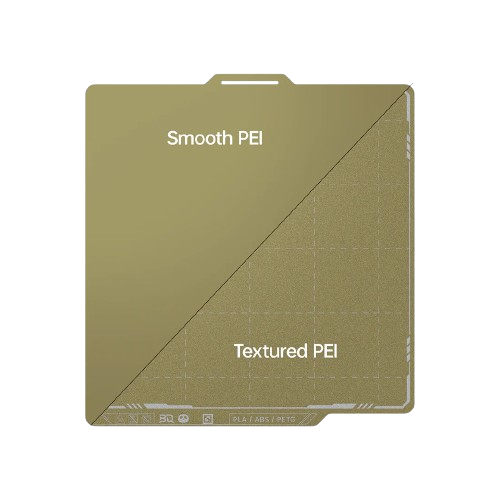
A worn or greasy plate is a top cause of warping; a fresh textured PEI sheet gives the first layer a strong grip.
Amazon →Affiliate links. We may earn a small commission at no extra cost to you.
HMS codes that point here
If Bambu Handy or Bambu Studio shows one of these HMS codes, it maps to the problem on this page. Each code links to Bambu's official step-by-step fix; come back here if the official steps don't solve it.
HMS_0300-0100-0001-0003– Heatbed over temperature · official fixHMS_0300-0100-0001-0007– Heatbed temperature sensor fault (open circuit) · official fixHMS_0300-1800-0001-0006– Heatbed leveling data abnormal · official fix