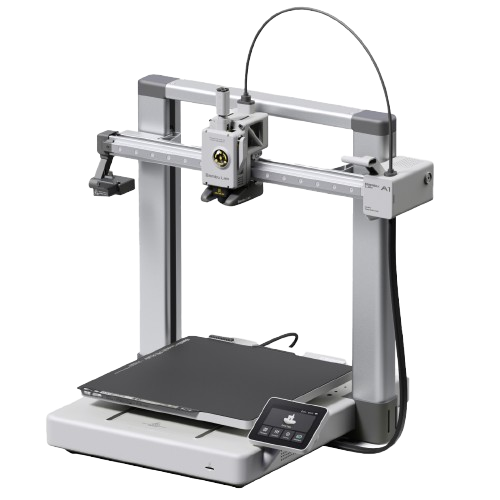
Should I buy the A1?
Yes, if you want more print volume than the A1 Mini for $100 more. The 256mm build covers most hobby use cases comfortably, and the AMS Lite combo at $499 is the cheapest way into Bambu multi-color printing.
| Motion & Print | |
|---|---|
| Build volume | 256 × 256 × 256 mm |
| Max speed | 500 mm/s |
| Acceleration | 10,000 mm/s² |
| Motion system | Bed-slinger |
| Layer resolution | 0.05–0.35 mm |
| Extruder | Direct drive |
| Nozzle (stock) | 0.4mm stainless steel |
| Temperature & Features | |
|---|---|
| Nozzle max | 300°C |
| Bed max | 65°C |
| Enclosure | No (open frame) |
| Heated chamber | No |
| Bed surface | Textured PEI (magnetic) |
| Auto leveling | Yes (strain gauge) |
| Vibration comp. | Yes |
| Flow calibration | Yes (automatic) |
| HEPA / carbon filter | No |
| AMS | AMS Lite (4 colors), AMS 2 Pro compatible (via OTA) |
| Camera | Optional |
| Display | 3.5" touchscreen |
| Connectivity | Wi-Fi 2.4GHz, LAN, USB-A, MicroSD |
| Machine dimensions | 389 × 389 × 458 mm |
| Weight | ~13.2 kg |
| Power supply | 100–240V AC, 500W |
| Noise level | ~35 dB |
The A1 is the A1 Mini with a bigger plate and a slightly higher price. Everything good about the Mini translates directly: auto-calibration, reliable first prints, good ecosystem integration, and AMS Lite for multi-color. The 256mm build volume is the standard Bambu footprint shared with the P1S, P2S, and X1C, a practical size that handles most hobby printing comfortably.
The AMS Lite combo at $499 is the cheapest way into Bambu's multi-color ecosystem. Still no enclosure, so ABS and ASA are off the table. Bed maxes at 65°C. If you need engineering materials, spend more on the P2S.
Pros
- Excellent out-of-box experience
- 256mm build volume covers most use cases
- Full auto-calibration suite
- AMS Lite combo makes multi-color accessible
- Good Orca Slicer integration (LAN+Dev mode)
- Compact for its volume
- Active community, lots of help available
Cons
- No enclosure. ABS/ASA not reliable
- Bed max 65°C limits material options
- AMS Lite (4 spools max) vs full AMS
- No camera in the box
- No activated carbon filtration
- Cloud-dependent by default (workaround exists)
| Material | Support | Notes |
|---|---|---|
| PLA / PLA+ | Native | Excellent. Default material. |
| PETG | Native | Works well. Use glue stick on PEI to prevent over-adhesion. |
| TPU (85A–95A) | Supported | Direct drive handles TPU. Print at 30–40 mm/s. |
| PLA-CF / PLA-GF | Hardened nozzle needed | Abrasive. Swap nozzle. Results are good. |
| ABS | Not recommended | Warping without enclosure. |
| ASA | Not recommended | Same as ABS. |
| PA / Nylon | Not recommended | Needs heated chamber and enclosure. |
First boot: Run auto-calibration before your first print (~10 minutes). Sets vibration compensation and flow correctly.
LAN mode: Enable LAN Only + Developer Mode in Settings for Orca Slicer. Use the access code and local IP.
Bed adhesion: Textured PEI grips PLA without glue. Clean with IPA before printing. For PETG, use glue stick as release agent.
AMS Lite: Start with one spool, add AMS Lite when you want multi-color. It connects easily after the fact.
A1 or A1 Mini? Mini for small prints under 180mm. A1 if you're unsure or want headroom. The $100 difference is worth it.
A1 or P2S? Same build volume, but the P2S ($549) is enclosed, 600 mm/s, and has an activated carbon filter. Get the P2S if you want ABS/ASA. Get the A1 if you only print PLA/PETG and want to spend less.
Can the A1 use the full AMS? No. The A1 and A1 Mini are only compatible with the AMS Lite. The full AMS is for P-series and X-series printers.
Orca Slicer? Yes. Enable LAN + Developer Mode, connect via IP. Works fully with the A1.
Starter accessories for the A1
What we would add to a new A1 in the first month.
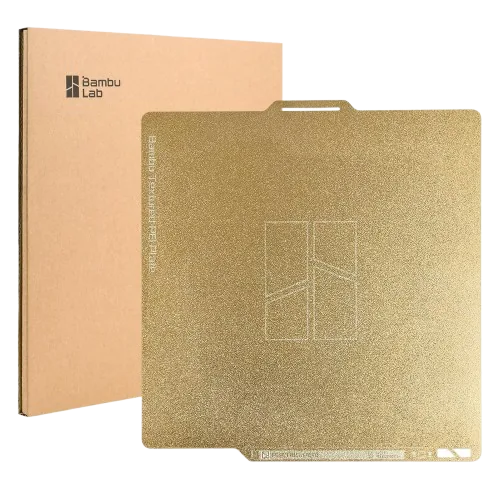
Double-sided 257 mm plate that fits the A1. Smooth side for glossy bottoms, textured side for easy release.
Amazon →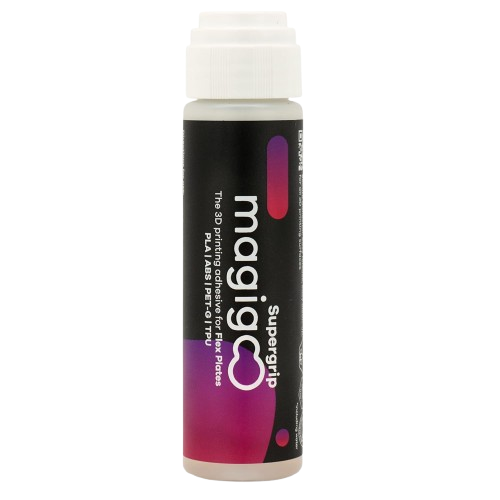
Keeps PETG from over-bonding to the A1's textured plate and helps tricky first layers on large flat parts.
Amazon →Fits the A1's quick-swap hotend. Swap one in before printing CF or GF blends, which wear out the stock nozzle in hours.
Amazon →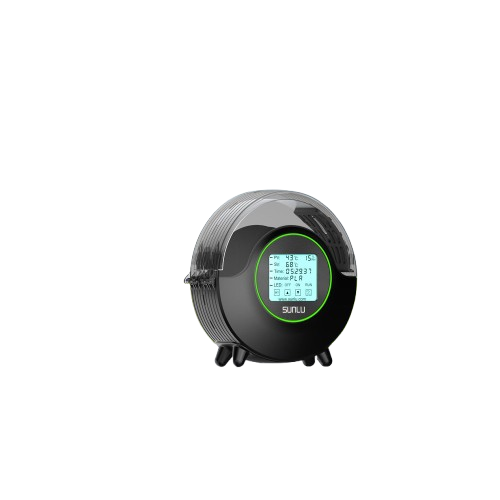
The open-frame A1 exposes filament to room humidity. A dryer keeps PETG and TPU printing cleanly.
Amazon →Affiliate links. We may earn a commission at no extra cost to you.