H2S
Engineering-gradeA different tier entirely. 1000 mm/s, 350°C hotend, 65°C actively heated chamber, and a build volume that finally gives you real room. The H2S is Bambu's first machine built for serious engineering materials work.
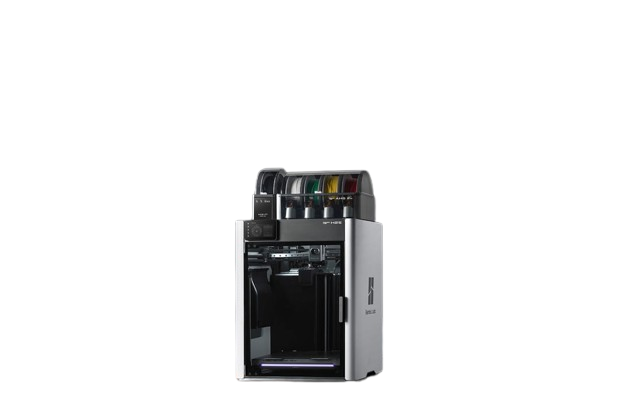
Should I buy the H2S?
Yes, if you need to print PA-CF, PC, or other high-temp engineering materials: the 350°C hotend and active 65°C chamber handle it reliably (a capability shared with the H2D and H2C) in Bambu's lineup. For PLA/PETG/ABS only, the P2S at $549 is a better fit.
| Motion & Print | |
|---|---|
| Build volume | 340 × 320 × 340 mm |
| Max speed | 1000 mm/s |
| Acceleration | 20,000 mm/s² |
| Motion system | CoreXY (H-series) |
| Layer resolution | 0.05–0.35 mm |
| Extruder | Direct drive (high-temp) |
| Nozzle (stock) | 0.4mm hardened steel |
| Temperature & Enclosure | |
|---|---|
| Nozzle max | 350°C |
| Bed max | 120°C |
| Enclosure | Yes, fully sealed |
| Chamber heating | Active, up to 65°C |
| Chamber heat time | ~25 min to 65°C |
| Air filter | Activated carbon (no HEPA) |
| Carbon filter | Yes |
| Bed surface | PEI (magnetic, high-temp) |
| Auto leveling | Yes |
| Vibration comp. | Yes (accelerometer) |
| Flow calibration | Yes (automatic) |
| Camera | Yes (included) |
| AMS | AMS 2.0 compatible (up to 16 colors) |
| Dual nozzle | No (single, see H2D) |
| Laser + cut module | Optional (10W, sold separately) |
| Connectivity | Wi-Fi 2.4GHz, LAN, Ethernet |
| Machine dimensions | ~480 × 440 × 580 mm |
| Weight | ~32 kg |
| Power supply | 100–240V AC, 1500W |
| Status | Current (Oct 2025) |
The H2S is a fundamentally different machine from everything else in Bambu's lineup. The combination of 350°C hotend, 65°C actively heated chamber, and 1000 mm/s print speed opens up materials that were simply not viable on the A/P/X series: PA-CF, high-temp PA grades, PC blends, and other engineering polymers that need both high extrusion temperatures and sustained chamber temperatures.
At $1,249, it launched just $50 above the X1 Carbon (the X1C is discontinued since March 2026, superseded by the X2D). For that $50 more: faster print speeds, higher-temperature hotend, active heated chamber, and a larger build volume. The X1C's Lidar quality sensing was the only reason to pick it instead, and with the X1C out of the lineup that choice no longer applies to new purchases. The H2S is heavy (32 kg), consumes 1500W, and takes 25 minutes to pre-heat. For PLA and PETG it's overkill, but for engineering parts it's the right tool.
Pros
- 350°C hotend: prints PC, PA-CF, high-temp materials
- 65°C active heated chamber: reliable engineering prints
- 1000 mm/s: fastest in the Bambu lineup
- 340×320×340 mm: large, useful build volume
- Ethernet connectivity option
- Hardened steel nozzle stock
- AMS 2.0 compatible
- activated carbon filtration
Cons
- Heavy at 32 kg, not portable
- 1500W power draw, check your circuit
- Chamber takes ~25 min to pre-heat
- No Lidar (X1C has this)
- No dual nozzle (H2D has this)
- Overkill for PLA/PETG printing
- AMS 2.0 sold separately
| Material | Support | Notes |
|---|---|---|
| PLA / PLA+ | Works | Open the door partially for cooling. Overkill but functional. |
| PETG | Works | Fine, but the H2S is not the machine for PETG day-to-day. |
| ABS / ASA | Excellent | The active chamber makes these even more reliable than on P2S. |
| PA-CF (PA12-CF, PA6-CF) | Excellent | This is what the H2S is designed for. Reliable with 65°C chamber. |
| PC (Polycarbonate) | Supported | 350°C hotend + active chamber makes PC viable. Dry filament required. |
| PC-CF / PC-ABS | Supported | Hardened nozzle stock helps. Good results. |
| PA6-GF / PA12-GF | Excellent | Glass-filled nylons work well here. |
| TPU | Supported | Works. Use low chamber temp for flexible materials. |
| PEEK / PEI / ULTEM | Marginal | 350°C is on the low end for PEEK. Some grades work; check manufacturer specs. |
Pre-heat protocol: For engineering materials, set chamber target to 65°C and wait ~25 minutes before starting the print. Let the temperature stabilize for 5 minutes. Parts printed with a pre-heated chamber have consistently better adhesion.
Dry filament: PA-CF and PC are hygroscopic. Always dry filament before printing (80°C for 6+ hours). Moisture causes popping, stringing, and poor layer adhesion, even the best chamber won't fix wet filament.
Power: The H2S draws 1500W. Verify your circuit can handle this, especially if other equipment is on the same breaker.
Ethernet: The H2S supports wired Ethernet in addition to Wi-Fi, useful in workshop environments with poor Wi-Fi coverage.
H2S or X1C? H2S. The X1C is discontinued since March 2026 (superseded by the X2D), so it is no longer a new-purchase option. The H2S is faster, larger, higher temp, and has an active chamber; a used X1C only makes sense if Lidar quality sensing is specifically what you need.
H2S or H2D? H2S if single-material engineering parts or multi-color via AMS is sufficient. H2D if you need simultaneous dual-material printing (soluble supports, dual-material parts), LiDAR, or the higher-power 40W laser. The H2S also takes the optional 10W laser and cutting module.
H2S or P2S? P2S ($549) if your materials stop at ABS/ASA. H2S ($1,199) if you need PC, PA-CF, or the larger build volume.
Is 1000 mm/s usable? The rated maximum; real-world quality printing is around 400–600 mm/s. But the faster acceleration profile does meaningfully reduce print times on complex models compared to the P-series.
Starter accessories for the H2S
What we would add to a new H2S in the first month.
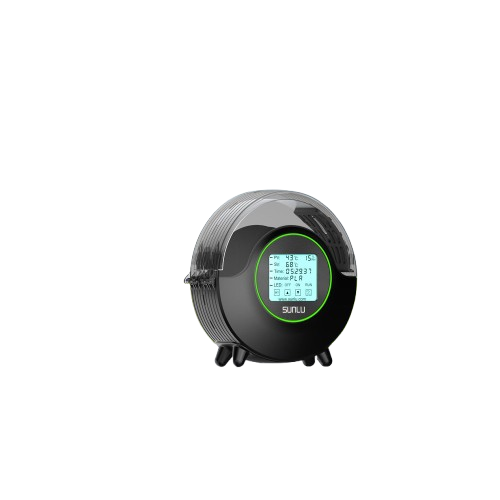
The H2S targets engineering materials, and PA or PC blends absorb moisture within hours. Dry every spool before it goes in.
Amazon →CF PETG that makes use of the H2S's 350°C hotend and hardened drive train. Stiff, light functional parts.
Amazon →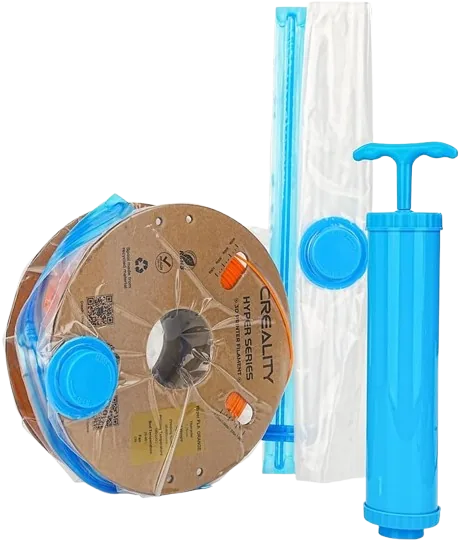
Opened engineering spools degrade fast in room air. Vacuum-seal them between H2S jobs.
Amazon →
Spare tighter-bore PTFE tubing for the H2S filament path when feed friction builds up over time.
Amazon →Affiliate links. We may earn a commission at no extra cost to you.