H2D
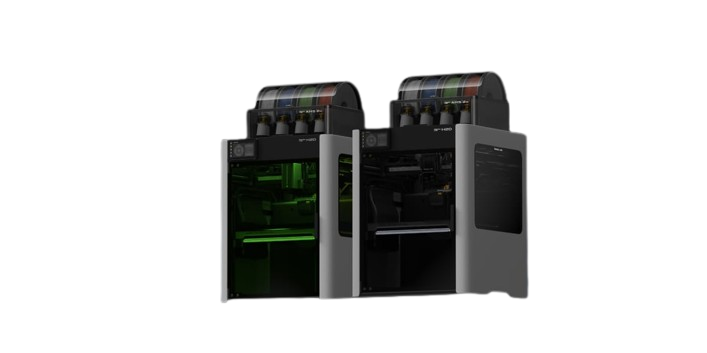
FlagshipBambu's current flagship. Dual independent hotends for true multi-material printing, 350°C, active 65°C chamber, and an optional laser module for engraving and cutting. Nothing else in the consumer space does all of this.
Should I buy the H2D?
Yes, if you specifically need simultaneous dual-material printing, soluble supports, true multi-material parts, LiDAR, or the higher-power 40W laser. Otherwise the H2S ($1,199) does the same engineering-grade printing, and takes the same optional 10W laser and cutting module, for $350 less at current street prices ($500 at list).
| Motion & Print | |
|---|---|
| Build volume | 350 × 320 × 325 mm |
| Max speed | 1000 mm/s |
| Acceleration | 20,000 mm/s² |
| Motion system | CoreXY (H-series) |
| Layer resolution | 0.05–0.35 mm |
| Extruder | Dual direct drive (independent) |
| Nozzle count | 2 (independent toolheads) |
| Nozzle (stock) | 0.4mm × 2, hardened steel |
| Temperature & Enclosure | |
|---|---|
| Nozzle max (each) | 350°C |
| Bed max | 120°C |
| Enclosure | Yes, fully sealed |
| Chamber heating | Active, up to 65°C |
| Chamber heat time | ~25 min to 65°C |
| Air filter | Activated carbon (no HEPA) |
| Carbon filter | Yes |
| Bed surface | PEI (magnetic, high-temp) |
| Auto leveling | Yes (both toolheads) |
| Vibration comp. | Yes |
| Flow calibration | Yes (per nozzle) |
| Lidar sensor | Yes (first layer & flow) |
| Camera | Yes (included) |
| AMS | AMS 2.0 + dual nozzle |
| Laser + cut module | Optional (10W or 40W, sold separately) |
| Connectivity | Wi-Fi 2.4GHz, LAN, Ethernet |
| Machine dimensions | ~490 × 450 × 580 mm |
| Weight | ~34 kg |
| Power supply | 100–240V AC, 1500W |
| Status | Current (Apr 2025) |
The H2D is Bambu's most capable machine and genuinely unique in the consumer-prosumer space. The dual independent toolheads are not a gimmick: both nozzles print concurrently, model material and soluble support material in the same layer, two different mechanical materials, or two materials at different temperatures without compromise. This is fundamentally different from AMS-style multi-color (which is one nozzle swapping filaments).
At $1,549 you need to be using the dual nozzle, LiDAR or the 40W laser to justify it over the H2S at $1,249. For single-material engineering parts, even in PA-CF, the H2S does that for $650 less, and it takes the same optional 10W laser and cutting module. The H2D earns its price when the dual nozzle is doing real work: soluble supports and true multi-material parts, plus LiDAR and 40W-laser support.
Pros
- True dual-material printing (unique capability)
- 350°C hotend × 2, covering the full engineering material range
- 65°C active heated chamber
- 1000 mm/s print speed
- Large 350×320×325 mm build volume
- Optional laser engraving/cutting module (10W or 40W)
- Soluble support capability (HIPS, PVA)
- Ethernet + Wi-Fi connectivity
Cons
- $1,549 at current street price ($1,749 list), only justified if the dual nozzle, LiDAR or 40W laser is genuinely used
- 34 kg, heavy and not easily moved
- Dual nozzle calibration requires initial setup time
- Laser module is an additional purchase
- 1500W power draw
- AMS 2.0 sold separately
Same hotend and chamber capabilities as the H2S. Both nozzles are rated the same.
| Material | Support | Notes |
|---|---|---|
| PLA / PLA+ | Works | Fine, though overkill. |
| PETG | Works | Fine. |
| ABS / ASA | Excellent | Active chamber = very reliable. |
| PA-CF / PA12-CF | Excellent | Target material. Excellent results. |
| PC / PC-CF | Supported | 350°C + active chamber handles PC. |
| HIPS (support) | Excellent | Soluble in limonene. Ideal support material for dual nozzle. |
| PVA (support) | Supported | Water-soluble supports. Works well in the enclosed chamber. |
| TPU | Supported | Useful for dual-material flexible parts. |
| PEEK | Marginal | 350°C is on the edge. Some PEEK grades work; verify with manufacturer. |
Dual nozzle calibration: Before your first dual-material print, run the XY nozzle offset calibration. Small offsets between the two nozzles cause visible layer misalignment. This is a one-time setup but takes 20–30 minutes to do properly.
Soluble supports: HIPS (limonene) or PVA (water) work as support materials. HIPS is more dimensionally stable; PVA is easier to dissolve. Match the support material temperature range to your model material.
Laser mode: Switching between print and laser involves a physical toolhead swap, plan for a few minutes. Always use appropriate eye protection; do not rely on the enclosure door as a laser shield.
Pre-heat: Same as H2S, set chamber to 65°C and let it stabilize for 25 minutes before engineering material prints.
H2D or H2S? H2S ($1,199) if you print single-material engineering parts or use AMS for multi-color. H2D ($1,549) if you need the true dual nozzle (simultaneous dual-material), LiDAR, or the higher-power 40W laser. Both take the optional 10W laser and cutting module.
What's dual nozzle vs AMS? AMS swaps one nozzle between filaments (with purge). Dual nozzle means two nozzles printing concurrently in the same layer. No purge tower needed for material changes, and both materials are at their own optimal temperatures simultaneously.
Is the laser module worth it? If you'd use it, yes. The H2D takes a 10W or 40W diode laser in an enclosed, filtered chamber. Not a replacement for a dedicated laser cutter, but useful for engraving and light cutting. Priced separately, so evaluate based on your actual use case.
Can you use one nozzle only? Yes. For single-material printing, the H2D acts like any high-temp machine with the second nozzle parked. No quality or speed penalty.
Starter accessories for the H2D
What we would add to a new H2D in the first month.
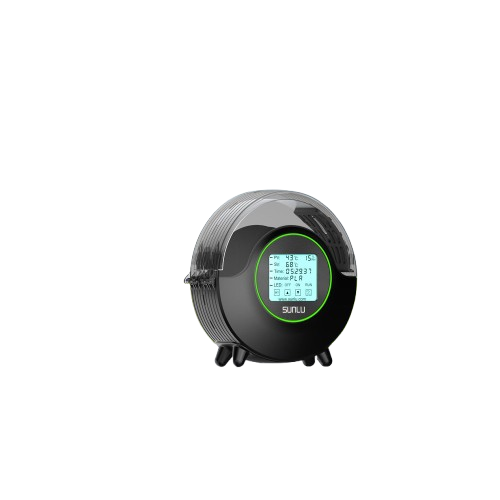
PA, PC, and the other materials the H2D is made for are hygroscopic. A dryer prevents foamy, brittle prints.
Amazon →Carbon fiber PETG suited to the H2D's 350°C hotend and hardened extruder. Stiff parts with low warp.
Amazon →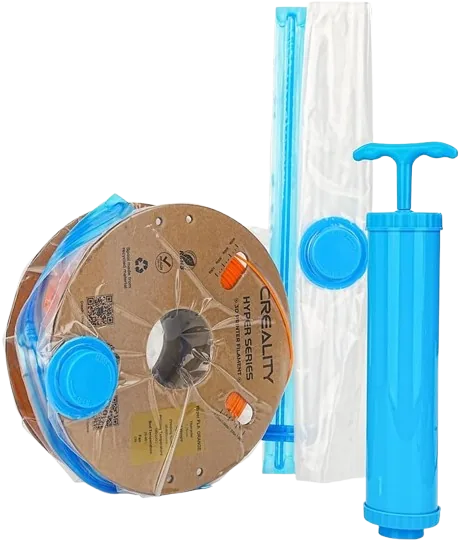
Engineering filament left in open air is ruined in days. Vacuum-seal opened spools between H2D print runs.
Amazon →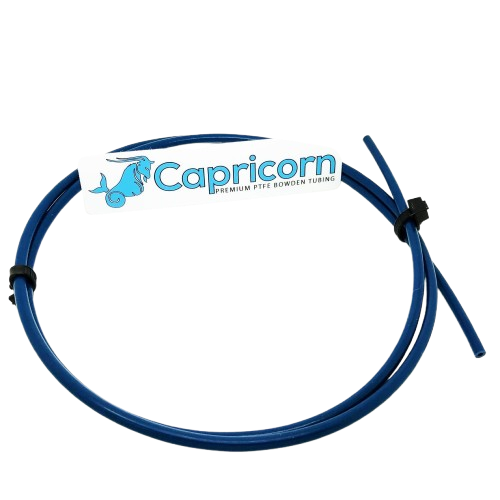
Replacement tubing for the H2D's filament path when feeding gets rough after months of use.
Amazon →Affiliate links. We may earn a commission at no extra cost to you.