Nozzle Too Close to Bed
Follow the steps to dial in your Z-offset.
Raise Z-offset live (+0.02 mm)
Start a print. During the first layer, go to Control ? Z Offset and increase in steps of +0.02 mm until the lines look slightly squished and opaque.
| Lines transparent or paper-thin | Nozzle too close ? raise Z |
| Scraping or clicking during print | Way too close ? raise Z immediately |
| Lines squished, opaque, touching | Correct |
Reset Z-offset to factory default
Go to Settings ? Machine ? Restore Factory Settings ? Z-Offset Only. This clears accumulated drift without changing any other settings.
Wipe the build plate with 99% IPA first, a dirty plate can throw off the auto-calibration result.
Run a full calibration
Go to Settings ? Calibration ? Full Calibration. This runs vibration compensation, flow calibration, and bed leveling in one pass and takes about 15 minutes.
Let the printer warm up to operating temperature first, thermal expansion shifts the Z-offset slightly.
Print a calibration pattern
Use the built-in calibration pattern: Settings ? Calibration ? First Layer Inspection. Alternatively, print a simple single-layer square (20 × 20 mm, 0.2 mm height).
Watch the first layer live and adjust Z-offset in 0.02 mm steps. Save the value once the result looks correct.
Hardware issues and edge cases
If the Z-offset keeps drifting, there is usually a hardware problem. Expand the topic that matches your situation:
Loose bed screws: Check and tighten the four corner screws underneath the bed, loose screws change the Z-offset after every print. Dirty LiDAR sensor (X1 series): Clean the sensor glass with a dry cotton swab, dust on the lens causes a systematically incorrect offset.
A partial blockage changes the effective nozzle length and shifts the Z-offset. Do a cold pull or clean the nozzle at temperature with a needle. A worn brass nozzle can lose material over time and increase the Z-gap.
Different materials and build plates need slightly different Z-offsets. Bambu Studio allows filament-specific offsets. Cool Plate: typically needs a slightly higher Z-offset. Textured PEI: texture adds roughly 0.05 mm of effective gap. High-temp plate: calibrate only after reaching operating temperature.
Still not working? Interactive troubleshooter · Community
Tools that fix this
Repair a scarred plate and stop over-squishing the first layer.
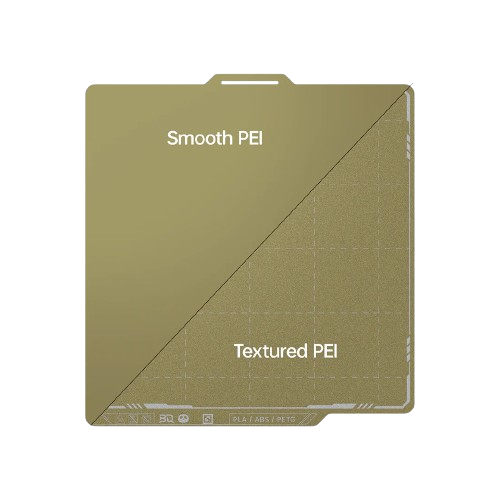
A nozzle set too close gouges the plate; once it is scarred, a fresh PEI sheet restores a flat, even printing surface.
Amazon →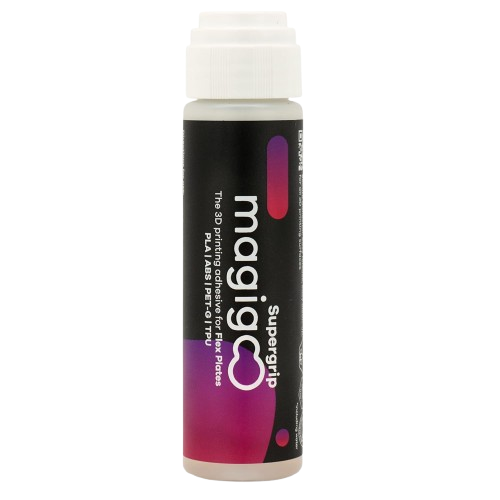
Lets you raise the Z offset to a safe height and still hold the part, so you can stop over-squishing to get adhesion.
Amazon →Affiliate links. We may earn a small commission at no extra cost to you.
Nothing worked?
Post your case in the community forum, photos help a lot, and we answer within a day. Or try the interactive troubleshooter.