X2D
New: April 2026 Best dual extrusionThe X1 Carbon's direct successor, launched April 2026. The X2D's headline is a dual-nozzle system: a main direct-drive extruder paired with a dedicated auxiliary nozzle for support material, delivering clean multi-material prints without the purge-tower waste of single-nozzle designs. Active 65°C chamber heating and a 25-color AMS ceiling round out a machine that does more than the X1C for $550 less.
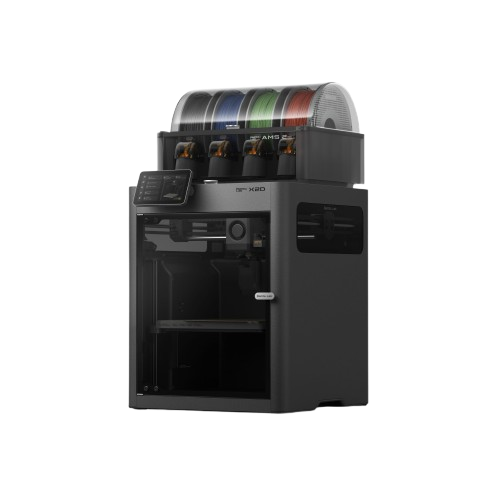
Should I buy the X2D?
Yes. If dual-nozzle multi-material or clean support removal matters to you, the X2D is the only Bambu printer at this price point with a dedicated auxiliary extruder. The active 65°C chamber also makes it genuinely better than the X1C for ABS, ASA, and Nylon. Skip it if you specifically need Lidar quality sensing (no Lidar on X2D; Vision Encoder is an optional add-on) or 350°C engineering temps (step up to the H2S at $1,249).
| Motion & Print | |
|---|---|
| Build volume (main nozzle) | 256 × 256 × 260 mm |
| Build volume (dual nozzle) | 235.5 × 256 × 260 mm |
| Max speed (main nozzle) | 500 mm/s |
| Max speed (aux nozzle) | 200 mm/s |
| Acceleration | 20,000 mm/s² |
| Motion system | CoreXY |
| Layer resolution | 0.05–0.35 mm |
| Extruder | Dual: Direct Drive (main) + Auxiliary |
| Nozzle (stock) | 0.4 mm (Quick-Swap compatible) |
| Flow sensing | Real-time (servo extruder) |
| Filament tangle detect | Yes |
| Temperature & Enclosure | |
|---|---|
| Nozzle max | 300°C |
| Bed max | 110°C |
| Enclosure | Yes, fully sealed |
| Chamber heating | Active, up to 65°C |
| Air filter | 3-stage: G3 pre-filter + H12 HEPA + carbon |
| Carbon filter | Yes |
| Bed surface | Textured PEI (magnetic) |
| Calibration | Camera-based (Motion Accuracy Cal.) |
| Lidar sensor | No |
| Vision Encoder | Optional add-on (50-micron accuracy) |
| AI failure detection | Yes: 2 cameras (Liveview + Toolhead) |
| Vibration comp. | Yes |
| AMS | AMS 2.0 (up to 25 colors) |
| Connectivity | Wi-Fi, LAN |
| Weight | 16.25 kg |
| Power supply | 100–240V AC |
The X2D is a thoughtful replacement for the X1C. It costs $550 less than the X1C did, and it delivers features the X1C never had: a dedicated auxiliary extruder for support material, active 65°C chamber heating, and a second toolhead camera. For most users, this is a clear upgrade path.
The one genuine compromise versus the X1C: no Lidar. The base X2D uses camera-based calibration for first-layer accuracy. The Vision Encoder (optional add-on, 50-micron accuracy) can fill part of that gap, but Lidar users who rely on real-time flow calibration may notice the difference. The X2D's AI camera system (two cameras vs the X1C's one) picks up some of that slack on failure detection.
Where the X2D genuinely surpasses the X1C: multi-material printing and engineering filaments. The auxiliary nozzle changes multi-material work from a compromise (purge towers, material waste) to something that actually works cleanly. The active 65°C chamber means ABS, ASA, and Nylon are first-class citizens, not afterthoughts. At $649 ($899 Combo), this is one of the better-value enclosed printers in Bambu's lineup.
Pros
- Dual nozzle: clean support removal without purge tower
- Active 65°C chamber: best ABS/ASA/Nylon in this price tier
- Up to 25-color printing with AMS 2.0
- Two AI cameras (Liveview + Toolhead) for better monitoring
- Real-time flow sensing (servo extruder)
- Filament tangle detection
- Quick-Swap nozzle system
- $550 cheaper than X1C was, more features for less
Cons
- No Lidar: Vision Encoder replaces it (less proven)
- 300°C hotend limit: no PC or high-temp PA-CF
- Just launched April 2026, long-term reliability TBD
- AMS sold separately in standalone version ($649 base)
- Aux nozzle adds complexity vs single-nozzle maintenance
- H2D ($1,549) still wins for serious dual-extrusion + engineering work
| Feature | X1 Carbon | X2D |
|---|---|---|
| Price (standalone) | $1,199 | $649 |
| Price (Combo) | $1,449 | $899 |
| Nozzles | 1 | 2 (DD + Aux) |
| Chamber heating | Passive (~45°C typical) | Active 65°C |
| AI cameras | 1 | 2 (Liveview + Toolhead) |
| Flow sensing | No | Yes (servo extruder) |
| Filament tangle detect | No | Yes |
| Max AMS colors | 16 | 25 |
| Build volume (Z) | 256 mm | 260 mm |
| Lidar sensor | Yes | No (Vision Encoder) |
| Calibration system | Lidar-assisted | Vision Encoder (MAC) |
The X2D wins on almost every hardware spec. The one X1C advantage: Lidar, which gives it an edge for detecting flow issues and first-layer problems on complex prints. Whether Vision Encoder calibration closes that gap long-term remains to be seen.
| Material | Support | Notes |
|---|---|---|
| PLA / PLA+ | Excellent | No active chamber needed. Vision Encoder calibration handles first-layer reliably. |
| PETG | Excellent | Dual camera monitoring catches stringing or adhesion issues early. |
| ABS / ASA | Excellent | Active 65°C chamber makes this first-class. Better than X1C's passive heat. |
| TPU (flexible) | Supported | Direct drive handles flexible filament well. |
| Nylon / PA | Good | Active 65°C chamber significantly helps vs passive setups. Dry filament essential. |
| PVA / HIPS | Excellent | Best use case for the auxiliary nozzle: dedicated support material, clean removal. |
| CF / GF composites | Hardened nozzle | Use hardened nozzle (Quick-Swap compatible). Active chamber helps layer adhesion on CF-PA. |
| PA-CF (standard) | Workable | 300°C nozzle sufficient for most PA-CF grades. Active chamber helps. Dry filament required. |
| PC | Not supported | 300°C hotend insufficient. Use H2S (350°C) for PC. |
| PA-CF (high-temp) | Not recommended | High-temp PA-CF needs 350°C+. Step up to H2S or H2D. |
Auxiliary nozzle calibration: Run the dual-nozzle offset calibration before your first multi-material print. The X2D guides you through this in the setup wizard. Get it right once and you won't need to redo it.
ABS/ASA, active chamber: Pre-heat the chamber for 10–15 minutes at 65°C before starting. Set bed to 100°C. With active heating, warping risk drops significantly compared to passive-only setups.
PVA in the aux nozzle: Store PVA in a dry box and load it only when needed: PVA absorbs moisture quickly and will clog. Run a short prime before starting multi-material prints to ensure flow.
Vision Encoder calibration: Unlike Lidar, Vision Encoder-based calibration (Motion Accuracy Calibration) is camera-based. Keep the camera lens clean. The system will prompt for re-calibration if it detects drift.
LAN mode: Enable LAN Only + Developer Mode in Settings for Orca Slicer. Connect via local IP and access code. Works the same as X1C.
X2D or X1 Carbon? X2D. It's $550 cheaper, has dual nozzles, active chamber, and more cameras. The only reason to hunt down an X1C is if you specifically need Lidar-based quality sensing: the Vision Encoder is unproven at scale.
X2D or P2S? P2S at $549 if you don't need dual extrusion or active chamber heating. X2D at $649 if you want support material printing, ABS/Nylon as a priority, or more AI monitoring. The $100 gap is very worth it for those features.
X2D or H2D? H2D at $1,549 if you need 350°C (PC, high-temp PA-CF), larger build volume (350×320×325 mm), or the H-series speed (1000mm/s). X2D if $649 budget and the 300°C tier materials cover your use case. Both have dual nozzles.
Is the auxiliary nozzle the same as the H2D's second nozzle? No. Different system. The H2D uses a full second extruder (equal capability for both materials). The X2D's auxiliary nozzle is optimized for support material specifically, not dual-equal-filament printing. For pure dual-material work with identical material capability, H2D wins.
Does the X2D support AMS 2.0? Yes. Up to 25 colors with AMS 2.0. The Combo version ($899) ships with one AMS unit.
No Lidar: is that a dealbreaker? For most users, no. Lidar on the X1C was primarily useful for: first-layer flow calibration and spaghetti/failure detection. The X2D's Vision Encoder handles first-layer calibration, and the dual-camera AI system covers failure detection. Lidar's flow sensing advantage is real but affects a minority of use cases.
Starter accessories for the X2D
What we would add to a new X2D in the first month.
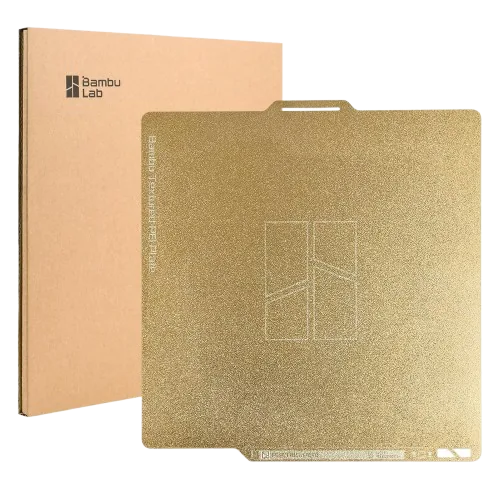
Double-sided 257 mm plate compatible with the X2D. Smooth or textured bottom finish from a single plate.
Amazon →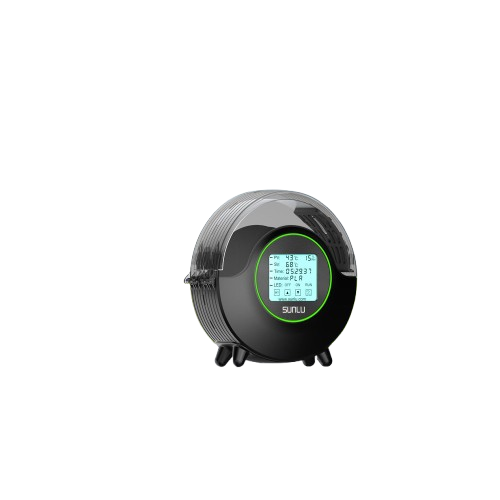
The PA and PC blends the X2D is built for absorb moisture within hours of unpacking. Dry them before every print.
Amazon →Carbon fiber PETG that puts the X2D's hardened extruder and hotend to work. Strong, light parts with low warp.
Amazon →Affiliate links. We may earn a commission at no extra cost to you.