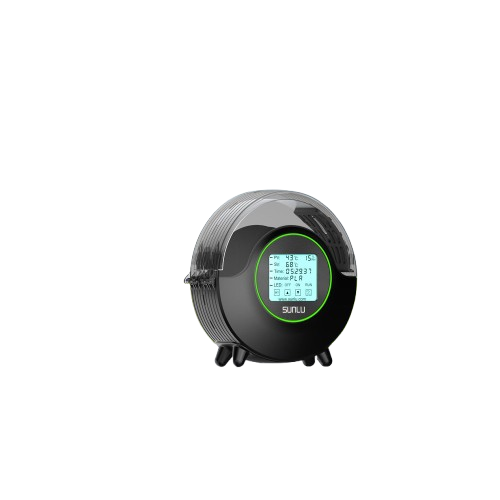
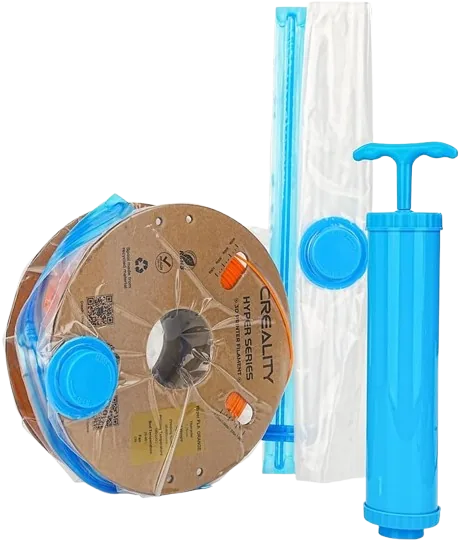
Moisture in filament causes more print failures than most people realise. The symptoms: crackling or popping sounds during extrusion, bubbles in the extruded line, weak layer adhesion, rough surface finish, and excessive stringing. If you see these, dry the spool before changing any slicer setting.
How urgent a dryer is depends on what you print:
- PLA: low moisture sensitivity. Fresh spools stored sensibly rarely need drying. Most PLA-only users can start with sealed storage and skip the dryer.
- PETG: medium sensitivity. More moisture-sensitive than PLA; dry it before use if it has been stored open, and store it sealed with desiccant. Wet PETG strings badly.
- TPU: moisture-sensitive and slow to dry (4 to 8 hours). Wet TPU prints noticeably worse.
- PA (Nylon) and PC: highly hygroscopic. Nylon absorbs moisture from the air rapidly, and the absorbed water causes bubbling, weak layer adhesion, and poor surface finish. Always print these from a dry box or dryer, and dry new spools before first use. For Nylon and PC a dryer is not optional.
More on each material in our materials guide. If your prints already show wet-filament symptoms, see stringing problems and layer splitting.